
This one is mostly pictures
The other pieces on this page argue that a training system beats attending a class. Fair enough — but an argument is easy to write. This one just shows you the thing, screen by screen, so you can judge it yourself before you spend anything.
We will walk one topic from start to finish, then one e-book chapter, then look at what the two of them produce. Everything below is a real screen from inside the courses, not a mock-up.
1 · Where you land
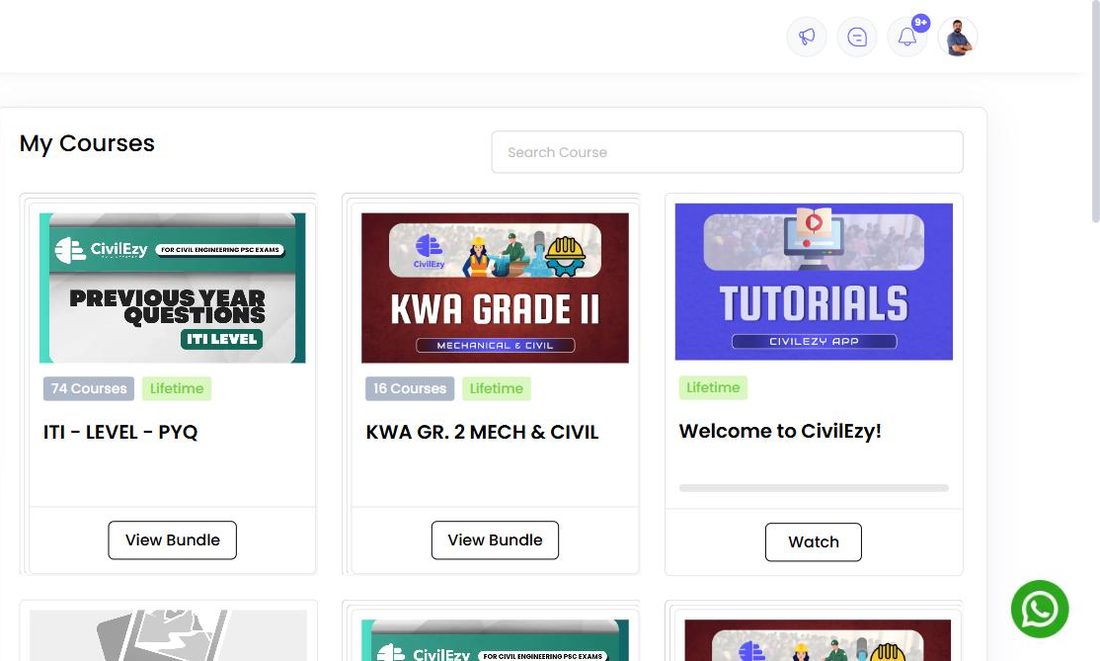
ലോഗിൻ ചെയ്താൽ ആദ്യം കാണുന്നത്.
After signing in you get your enrolled courses, not a catalogue. There is nothing to browse and nothing to choose between — the course you are studying is the one in front of you.
2 · One topic, four steps, always in the same order
This is the loop the whole system is built on. Every topic runs video class, then audio revision, then an interactive lesson, then a practice quiz — and the grade sits in the corner while you work.
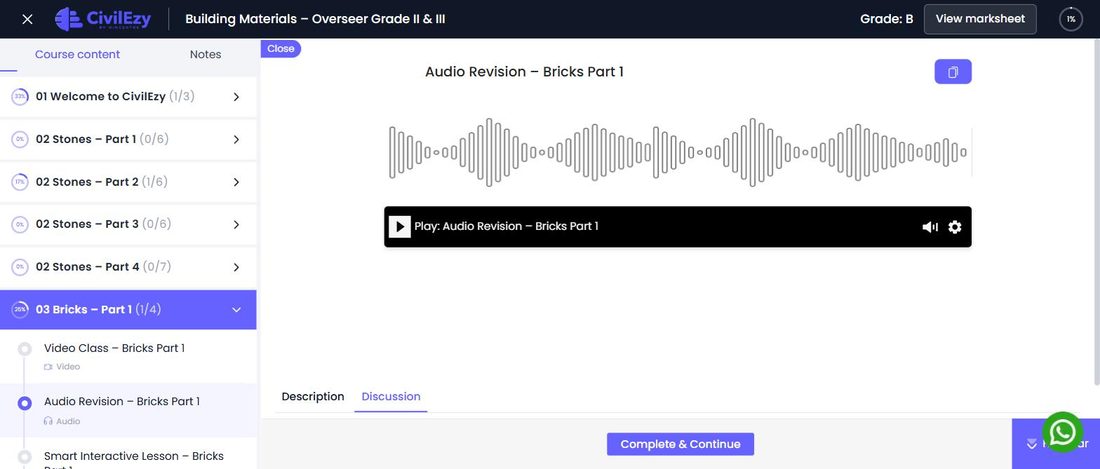
The value is not in any single step. It is in the sameness. A student who has to decide what to study tonight will, often enough, decide to study nothing.
3 · Inside a Smart Lesson
The interactive lesson is the part that has no equivalent in a classroom. It opens on three tabs — Study, Revision and Exam — and they are three genuinely different activities, not three views of the same page.
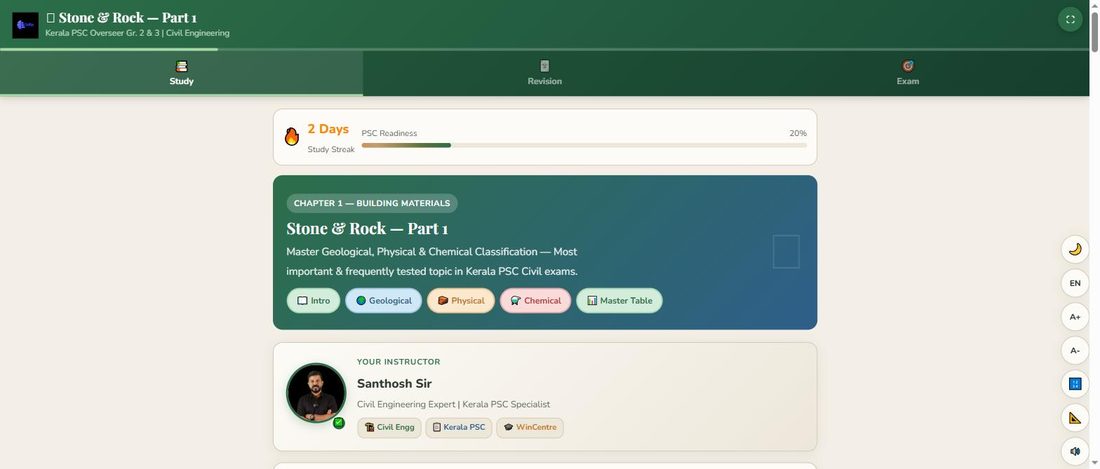
Study — the topic taught properly
Full explanations, diagrams, comparison tables, worked examples and the traps flagged where they occur rather than in a list at the end. It reads like a well-made textbook chapter that happens to know which bits the examiner likes.
Revision — three different ways of being asked
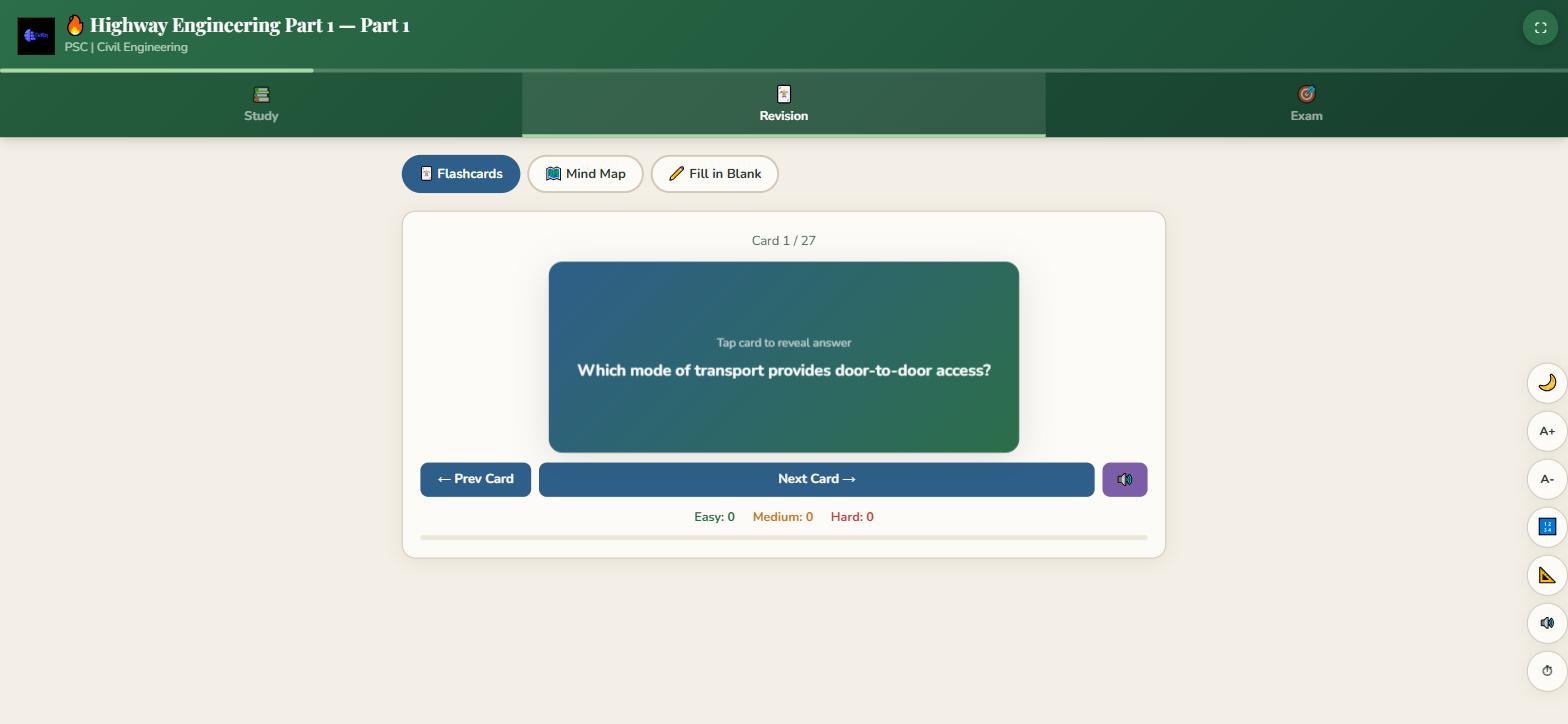
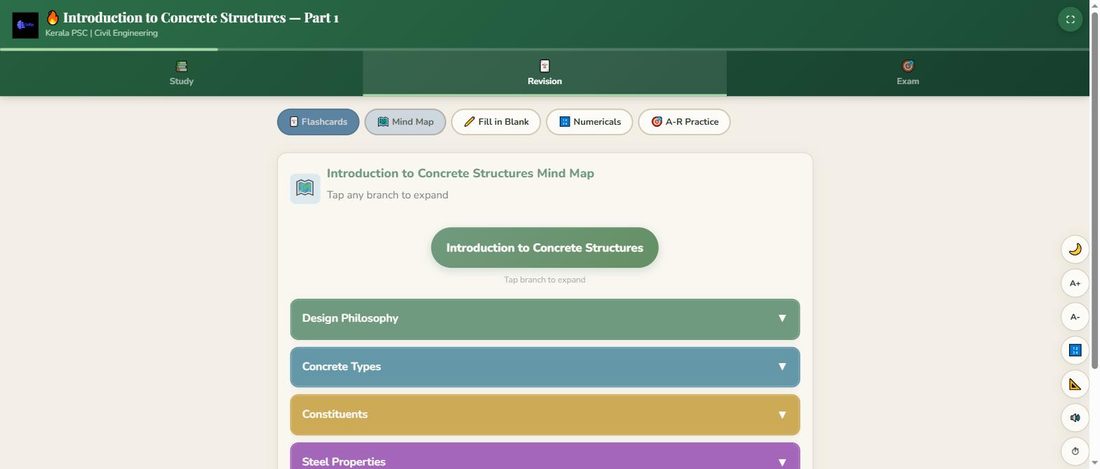
Three modes, because a fact you can only recognise in one phrasing is not a fact you own. Flashcards make you produce the answer before you turn the card. The mind map shows the whole topic as one tree, which is how you notice the part you skipped.
And then the one students quietly avoid, which is the reason it is there:
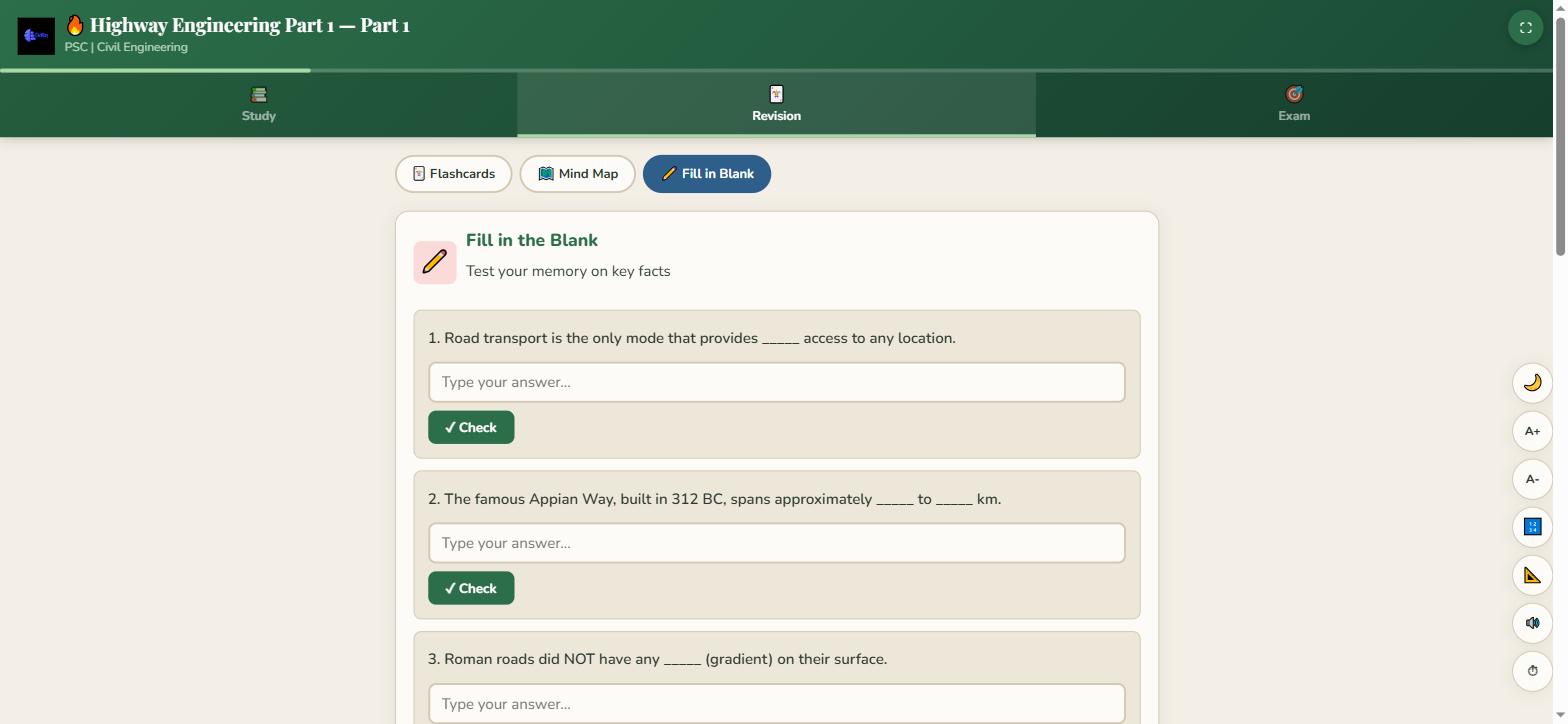
This screen is the most honest one in the whole platform. Multiple choice lets you recognise your way to a mark. A blank box does not. If you can fill these in cold, you know the topic; if you cannot, you have been reading rather than learning it.
Exam — the paper, with the clock and the penalty
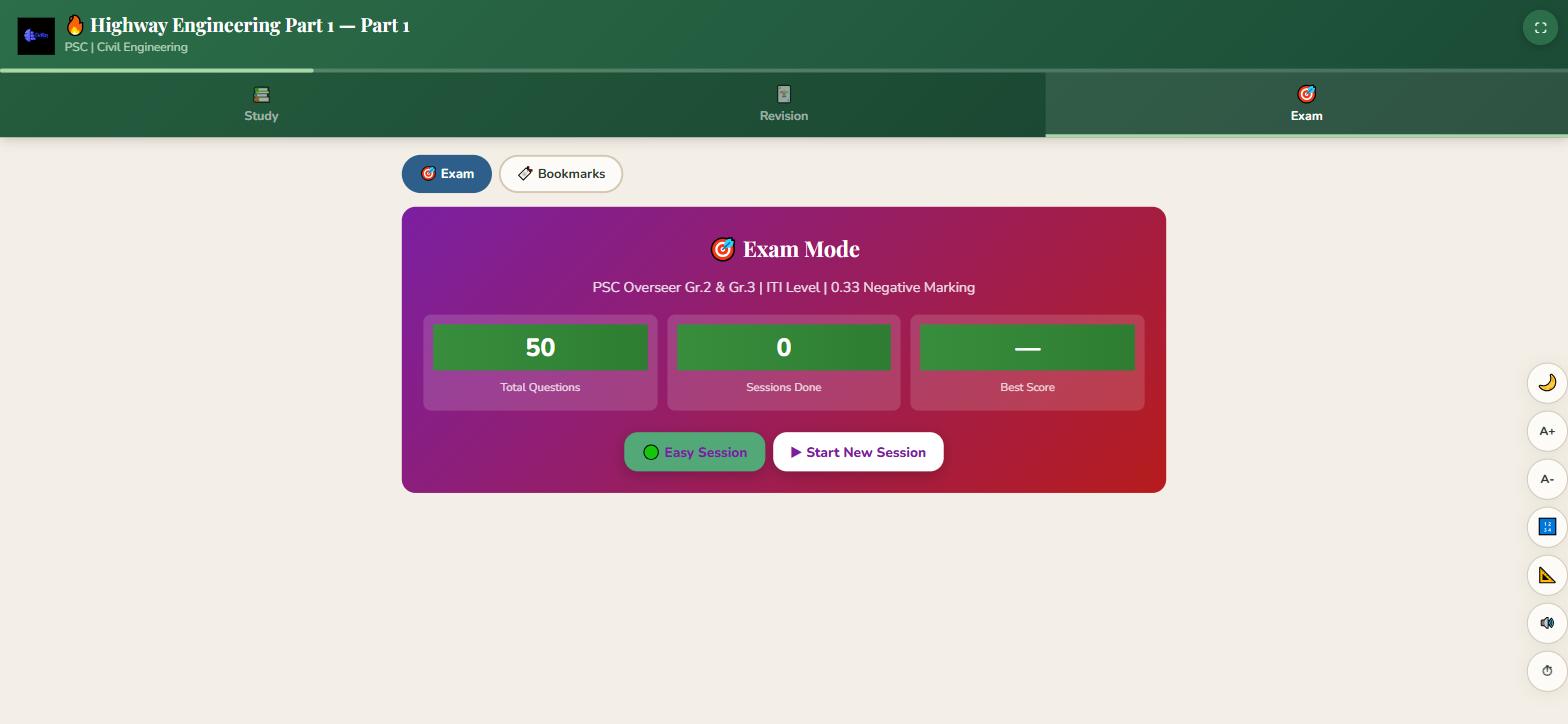
Negative marking changes the skill being tested. Without it, a question you half-know is worth a guess. With it, you have to know whether you know — and that is a habit you can only build by practising under the penalty, not by reading about it.
4 · The e-books, where it gets hard enough to stick
പഠിക്കാൻ കോഴ്സ്. ഉറപ്പിക്കാൻ ഇ-ബുക്ക്.
The course teaches the topic. The e-books are where you meet it enough times to keep it. Each is a module broken into chapters and topics, with its own question bank and a cumulative exam at the end.
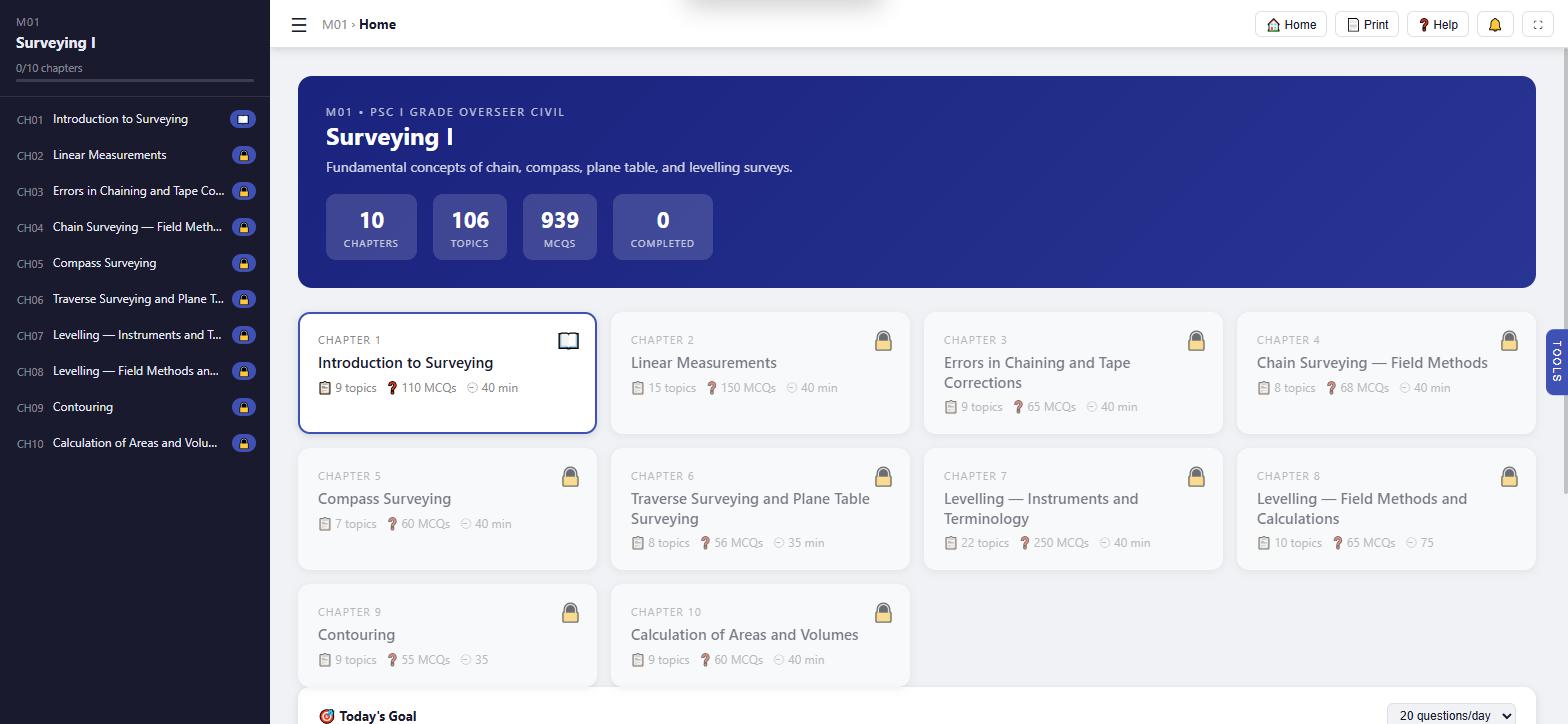
Open a chapter and you get its topics listed before you start, a target score, and read-aloud if you would rather listen than read.
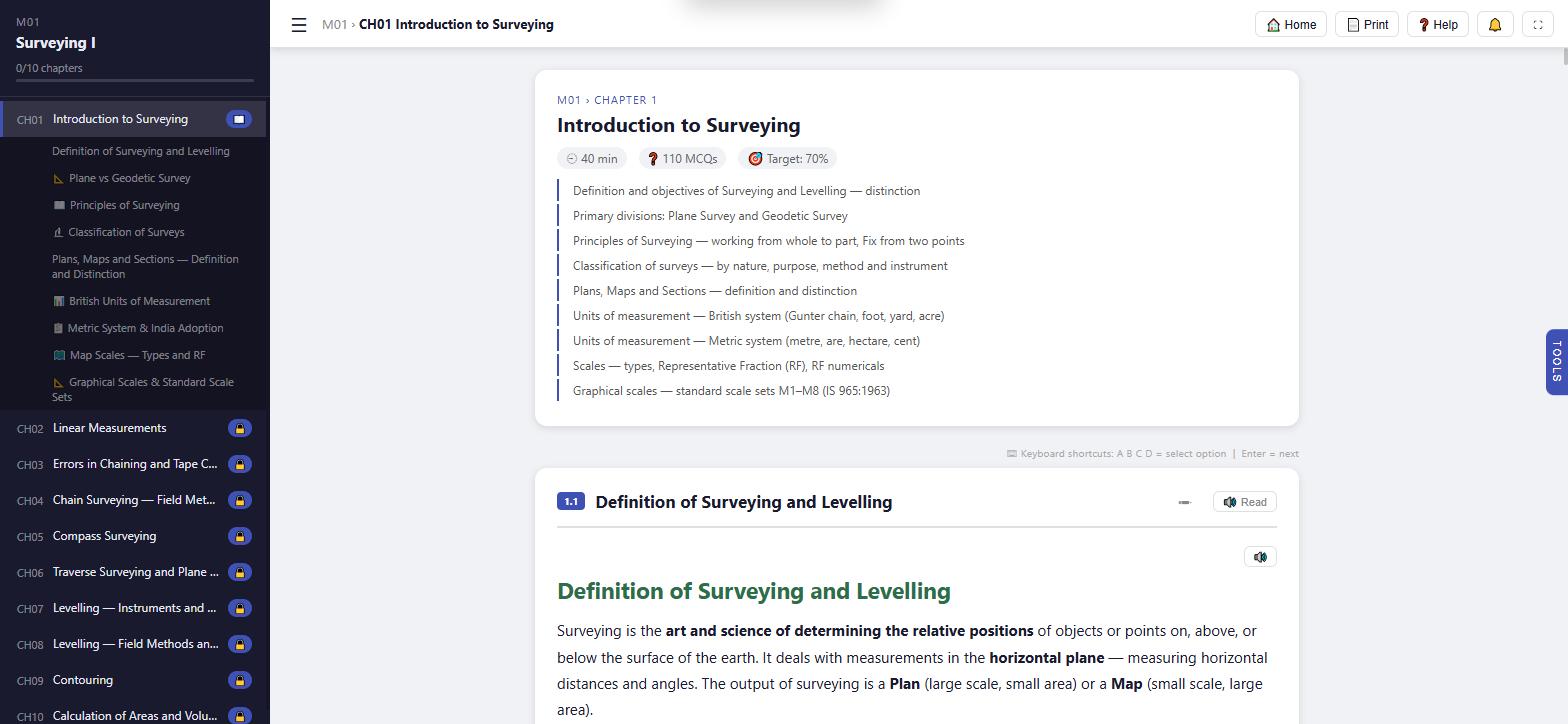
Then the questions — and every one of them carries its explanation.
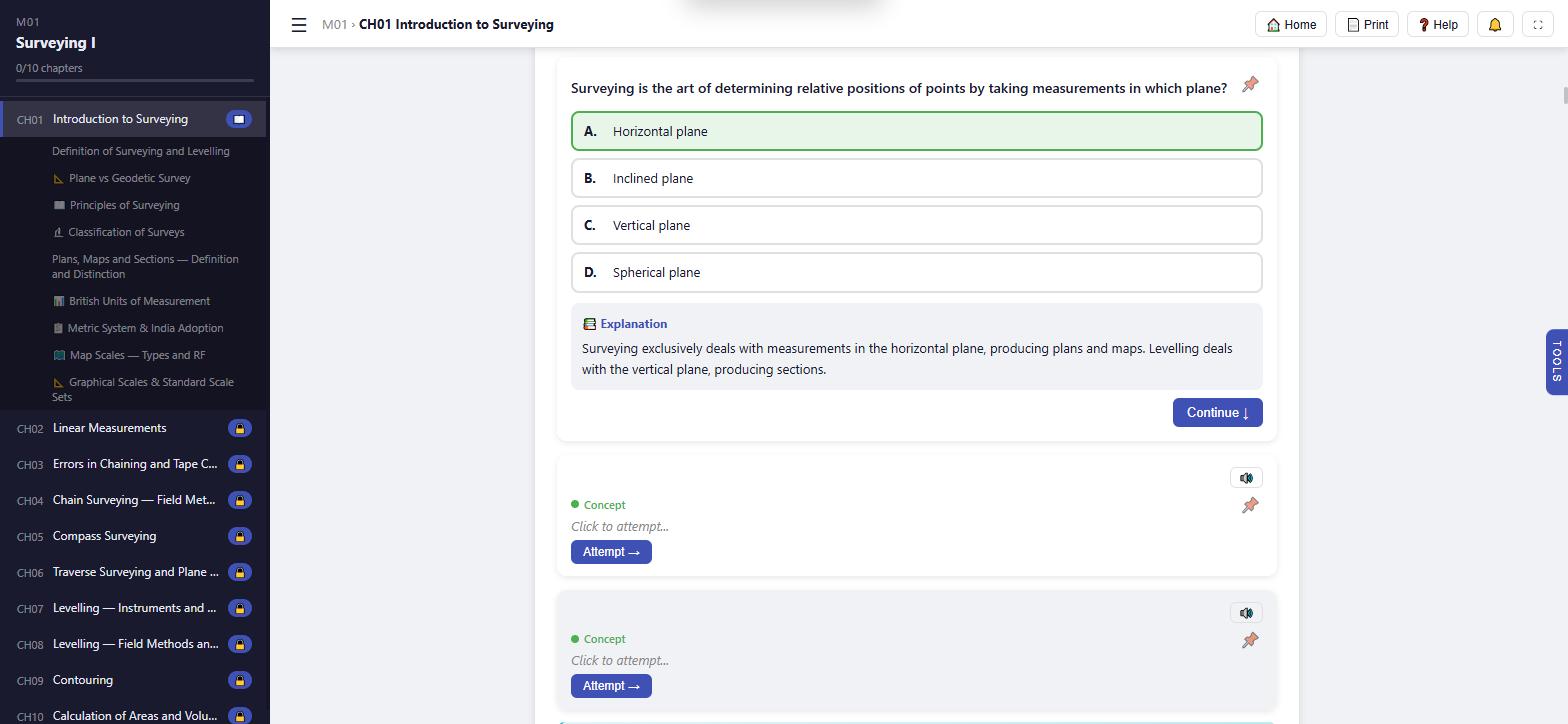
That immediacy is the whole point. A week later you have forgotten your reasoning, and a correction has nothing left to attach itself to.
5 · The real papers, broken up into subjects
Separately from the teaching, there is a large set of previous-year papers — and they are not served as PDFs to print. Each paper is split into its subjects, so you can sit the estimation questions from every paper rather than one whole paper at a time.
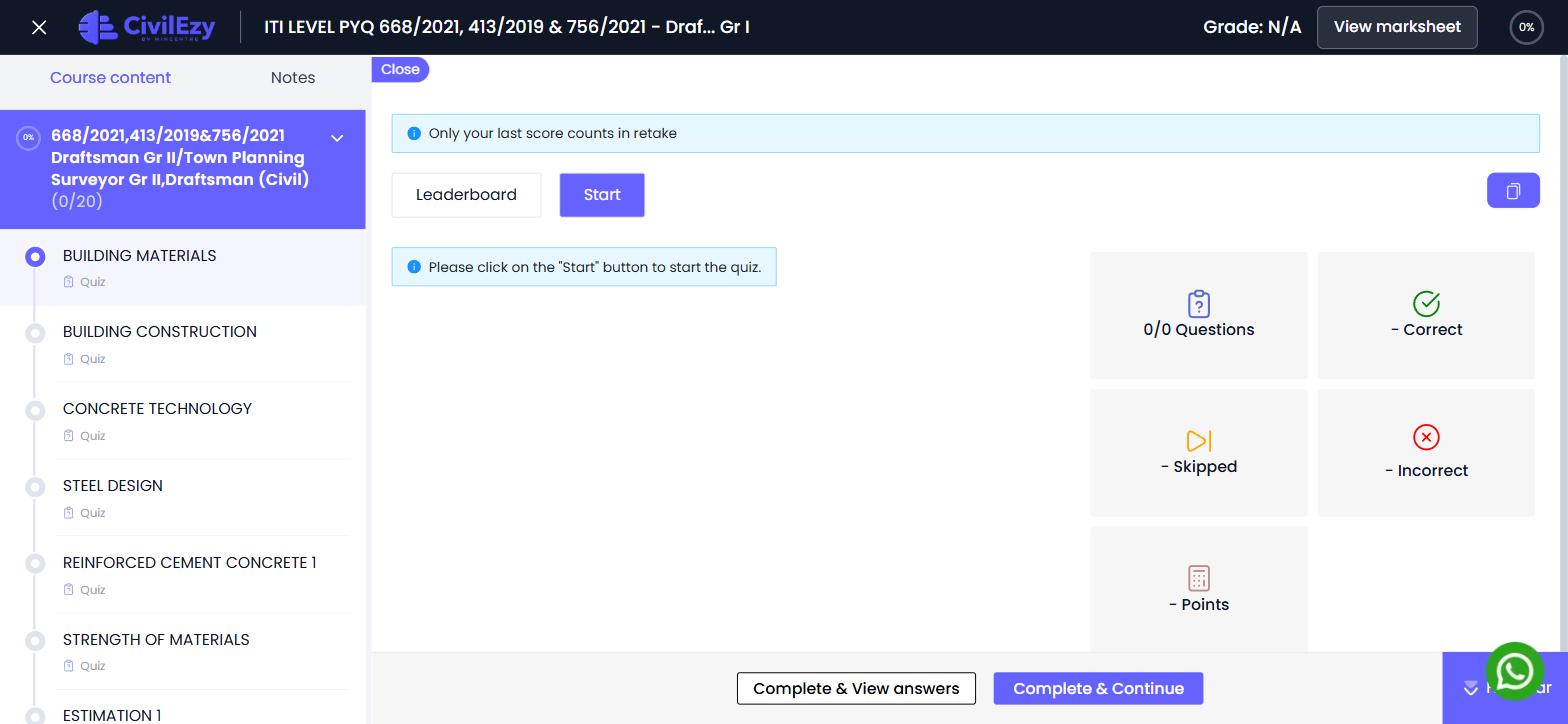
That split matters more than it looks. A whole paper tells you a single overall mark. The same questions grouped by subject tell you which subject is costing you the marks — which is a thing you can act on.
Note Skipped sitting there as its own count, next to correct and incorrect. Leaving a question alone under negative marking is a legitimate decision, and it is tracked as one rather than being quietly folded into your wrong answers.
6 · What all of it produces
Everything above exists to fill in one screen. This is the one that answers am I actually on track? — a question that, in a traditional class, has no answer until results day.
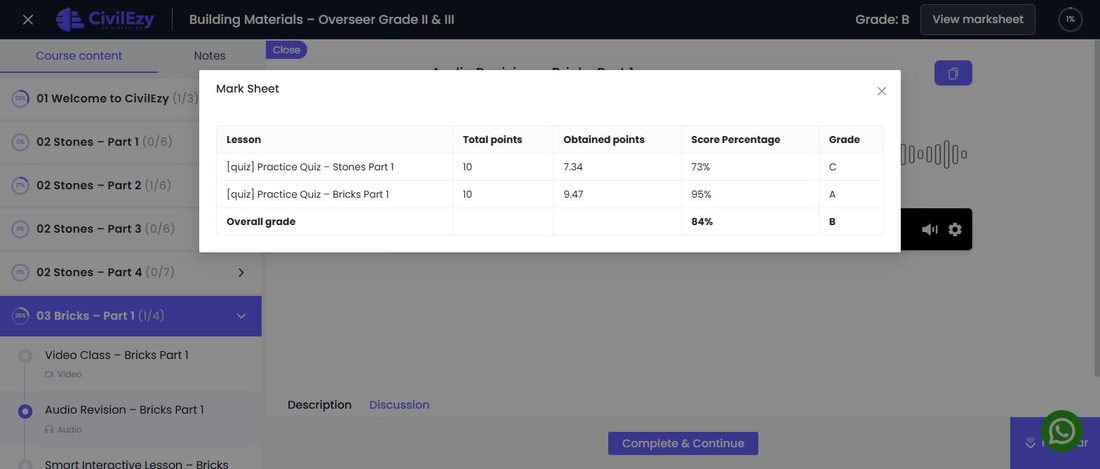
A grade per chapter means your weak area names itself. You are not trying to remember which subject felt shaky in July — you are looking at three chapters below par and deciding what to do about them this week.
7 · And the small stuff, which is not decoration
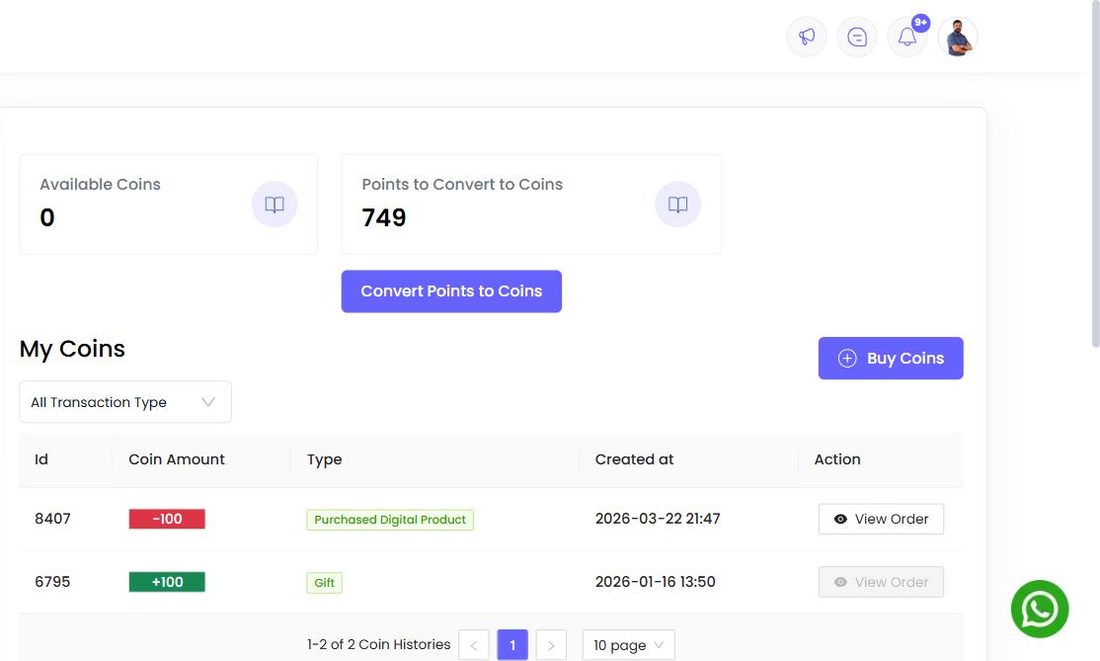
Points and badges are not the reward. Clearing the exam is the reward. They exist because a nine-month preparation needs evidence that the work is landing far more often than an exam result can provide it — and because a streak you would rather not break is worth more on a tired Tuesday than any amount of good intention.
What is not in these pictures
Three things, in the interest of an honest page:
- Coverage varies by level. Not every level has the same mix of video, audio and interactive lessons — check the page for your own level rather than assuming what you see here applies to it.
- The live class is not on this page at all. It happens nightly at 7:30 and is free to sit in on, and it is where doubts get answered by a person.
- None of this studies for you. It removes the deciding, the organising and the self-assessment. The sitting down is still yours.
If you want the argument behind all of this rather than the tour, that is a class is not a course.