
The word is doing a lot of work, so let me define it
സിസ്റ്റം എന്നാൽ എന്താണ്?
Every institute now says it has a system. Usually it means a timetable and a set of notes. That is not nothing, but it is not a system either.
Here is the definition I would defend. A system of training is an arrangement that produces preparation without requiring you to be disciplined, and that tells you how far along you are while there is still time to change it. Five things have to be true.
1. A map, not a playlist
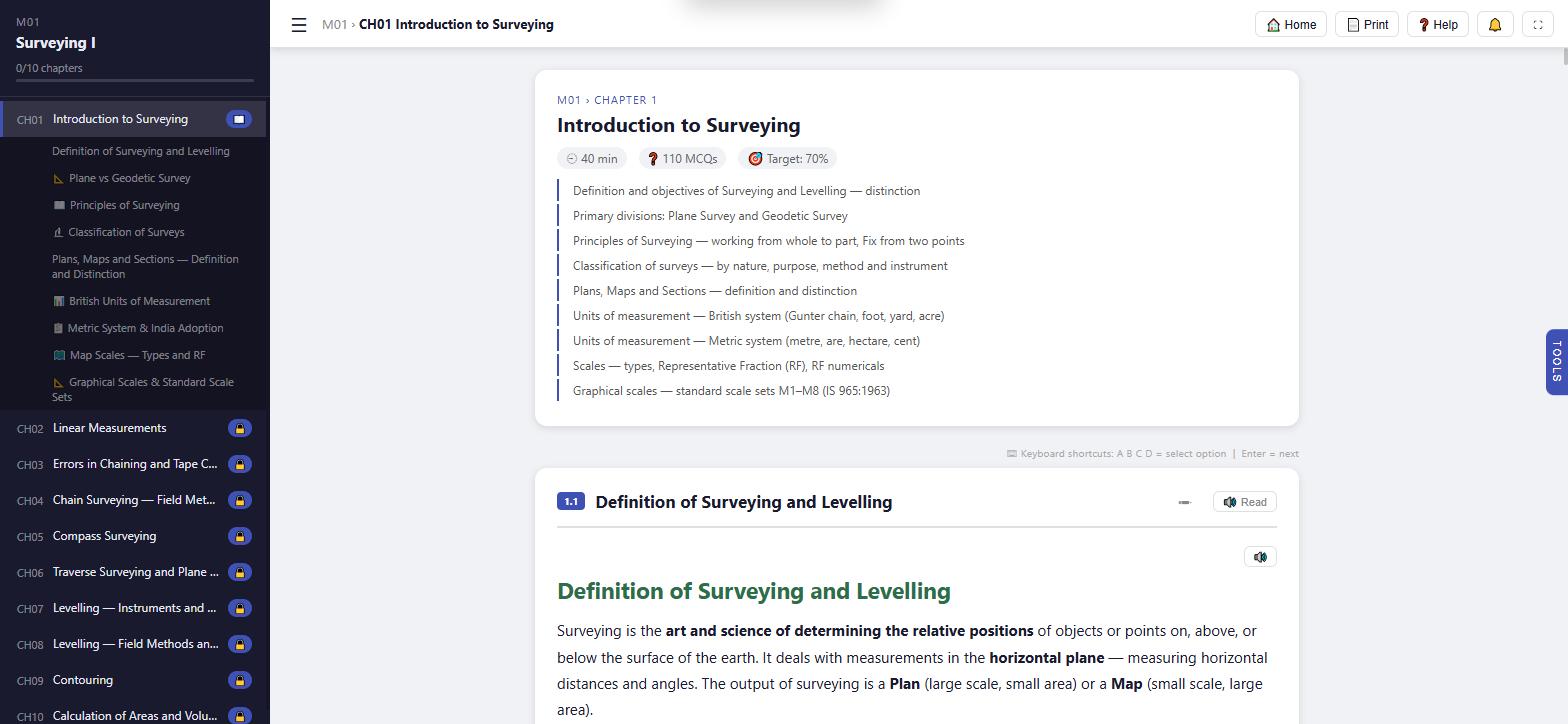
A playlist is a pile of videos in some order. A map is every topic the syllabus names, laid against what exists, so that a gap is visible as a gap rather than as something nobody happened to mention.
The practical test is simple: can you see, today, which parts of your syllabus you have not touched? If the honest answer is roughly, you have a playlist.
2. The same loop, every time
A system repeats one small sequence rather than offering you a menu. Ours is four steps per topic: the class, a revision pass, an interactive lesson that makes you produce answers, then questions.
The value is not in any one of those four. It is in the fact that it is the same four, in the same order, for every topic — so studying stops being a series of decisions about what to do next. You are never choosing; you are only continuing.
3. An output you can measure
This is where most preparation quietly fails. Effort is easy to see. Hours are easy to count. Neither tells you anything about readiness.
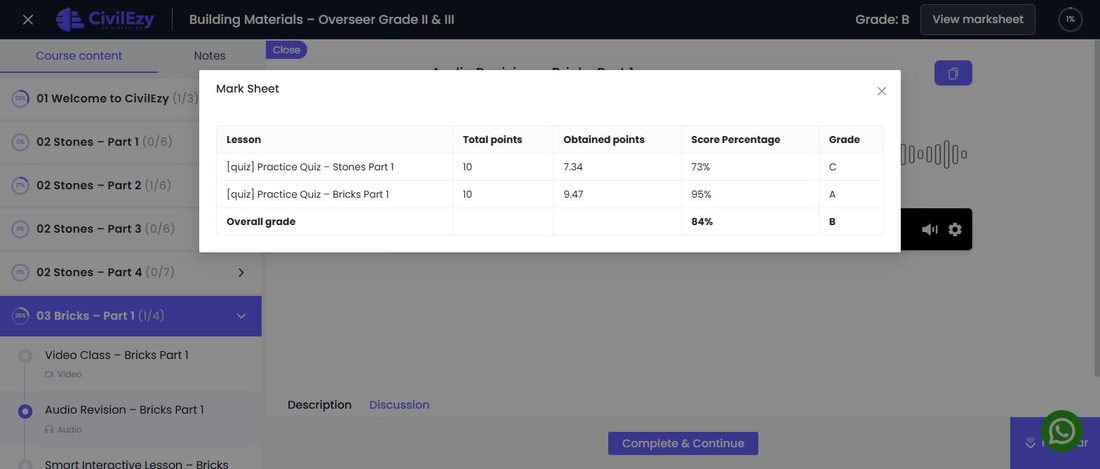
A system produces a number per chapter, not a feeling about the subject. Not because a number is the point, but because a number is the only thing you can act on in month three instead of after the result.
4. Correction, not just scoring
A score alone is a verdict. A system has to close the loop — tell you why the answer was wrong, and then put that idea in front of you again later, when you have had time to forget your mistake but not the correction.
A test that only grades you is measurement. A test that grades you, explains you, and comes back for you is training. The difference is whether anything changes as a result.
5. It does not depend on you being motivated
പ്രചോദനത്തെ ആശ്രയിക്കാത്ത ഒരു ക്രമം.
This is the property that actually decides who clears the exam, and it is the one nobody advertises.
Motivation is real, and it is a terrible foundation. It is high in the first month, low in the fourth, and absent in the seventh — which happens to be the month that matters most. Any plan that only works while you feel like working is a plan that fails in month seven.
A system is not what you use when you are motivated. It is what carries you through the weeks when you are not.Santhosh Sir
So a real system reduces the number of decisions to almost zero, makes the next step obvious, keeps a visible record of the streak you would rather not break, and gives you small, frequent evidence that the work is landing.

How to tell a real system from a marketed one
Apply this to us as readily as to anybody else. Five questions, and every one of them is answerable inside a free trial, before you pay:
- Can you see the whole syllabus mapped against what actually exists, before you buy?
- Is the next step decided for you, or do you land on a menu of videos?
- Does every question tell you why you were wrong, immediately?
- Is there a grade per chapter — or only a percentage complete?
- Does anything bring an old chapter back before you have forgotten it?
The fourth one is the tell. A percentage complete measures how much of the content you have consumed. That is a fact about the course, not about you — and you can finish a course at 100% and still fail. A grade per chapter is a fact about you, which is the only kind that helps.
What a system cannot do
Three limits, stated plainly, because a page that claims none is not describing a product:
- It cannot make you open it. It can lower the cost of starting to almost nothing, and it can make stopping visible. It cannot sit you down.
- It cannot replace a teacher on a genuinely hard doubt. Some questions need a person who can see where your understanding went sideways. That is why the live class still runs nightly and why you can message directly.
- It cannot rescue the wrong syllabus. If you are preparing at the wrong level for the post you want, a very good system will efficiently prepare you for the wrong exam.
Anyone claiming their platform solves all three is describing a wish. What a system genuinely removes is the daily requirement to be disciplined, organised and self-assessing all at once — which is enough, because that is what actually breaks in month seven.
What it looks like across an ordinary week
Put together, the five properties produce a week that has almost no planning in it:
- The next topic is already decided — you open the course and continue.
- Each topic runs the same four steps, so nothing has to be chosen.
- Questions follow immediately, and wrong answers are explained on the spot.
- A grade appears per chapter, so the weak areas are named rather than felt.
- Older chapters come back around before you have fully forgotten them.
- At the end of the week you can answer am I on track? with a number.
That last line is the whole difference. In a traditional class, that question has no answer until results day — which is the argument in a class is not a course.